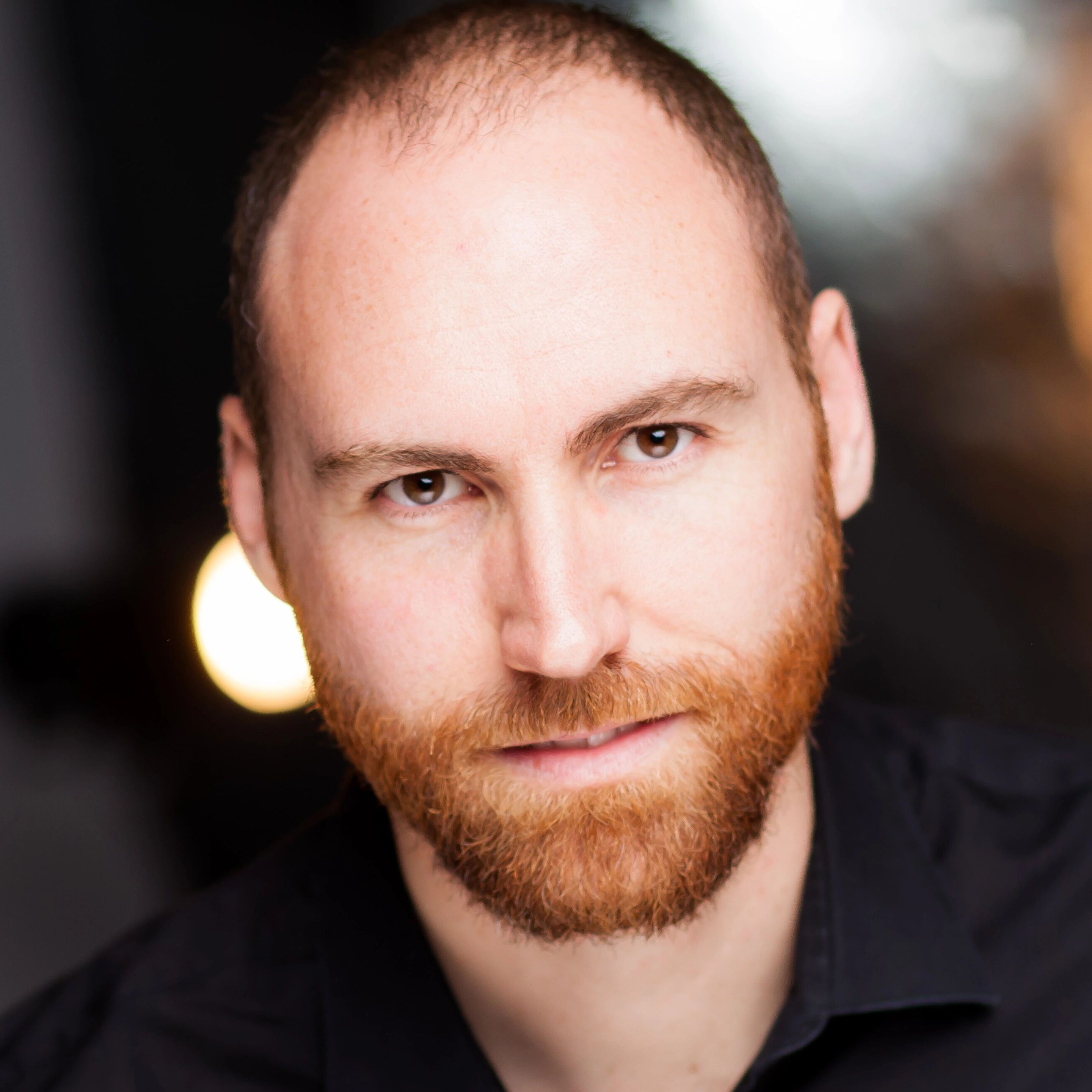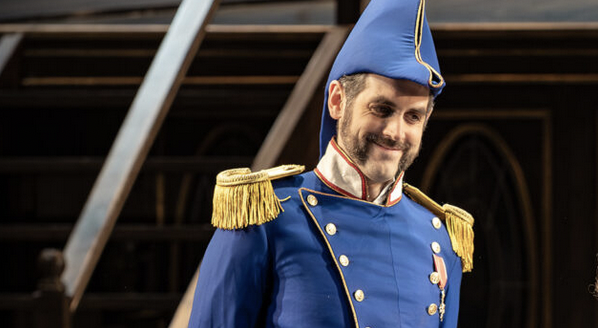

In this month's In Conversation With..., Waterperry's Artistic Director, versatile bass-baritone and one of our SingersResound mentors, John Savournin, takes the stage! In this blog, John looks at his recent experience at ENO as Captain Corcoran in HMS Pinafore, juggling his career with being the Artistic Director and CEO of Waterperry Opera Festival and the importance of a portfolio career.
John Savournin on his recent experience at ENO, as Captain Corcoran in HMS Pinafore, and on juggling his career with being the Artistic Director and CEO of Waterperry Opera Festival
I have recently enjoyed the enormous privilege of performing Captain Corcoran in ENO's wonderful production of HMS Pinafore. One of the questions I'm often asked by young singers is how rehearsing an operetta differs from rehearsing a "straight" opera. While both demand excellent musicianship and vocal technique, the experience in the rehearsal room can feel remarkably different. Perhaps the biggest adjustment is the amount of spoken dialogue. Switching seamlessly between speech and singing requires a different kind of stamina, and the dialogue needs just as much preparation as the music. Add dancing and movement into the mix, and suddenly you're juggling several disciplines at once. It's hugely rewarding, but it certainly keeps you on your toes. Clarity of text is also absolutely essential. Gilbert and Sullivan particularly relies on the audience understanding every word, as the writing is often quite dense and complex, especially if you're delivering a rapid-fire patter song. Diction becomes one of your greatest assets.
In many ways, Gilbert and Sullivan leaves you with nowhere to hide. The orchestration is often light, allowing the text to shine through, and you have to be very disciplined in the way you tackle the comedy. Great comedy isn't about trying to be funny; it's about absolute commitment, precision and trust in the writing. Timing, listening and reacting truthfully are every bit as important as singing the notes accurately.
Perhaps my favourite aspect is the direct connection with the audience. Comedy is wonderfully alive. Every audience responds differently, and that relationship with the audience becomes part of the performance itself.
Alongside my performing career, I also have the privilege of serving as Artistic Director and CEO of Waterperry Opera Festival. It's a role that couldn't be more different from standing on stage, and yet it complements my work as a singer perfectly. The job is wonderfully varied. One moment I'm working on fundraising, the next I'm balancing budgets, planning future artistic programmes, casting productions, meeting donors, meeting with trustees or supporting the team as we deliver the festival. No two days are ever the same, and learning to balance my time carefully is essential if I'm to do justice to both my administrative responsibilities and my performing/directing career.
A portfolio career is becoming increasingly common in our industry, and I genuinely believe it's something young artists should consider. Building additional skills doesn't mean you've failed as a singer. Quite the opposite. It makes you a more rounded, interesting and open-minded artist.
If you have an itch to explore another area of the profession, I would encourage you to be brave enough to investigate it. If directing interests you, write to directors and ask whether you can shadow them during rehearsals. If you're passionate about education or community engagement, contact Learning and Participation teams at opera companies and express your interest in getting involved as either a performer or assistant director. There are so many ways to contribute to our art form beyond performing alone.
The skills you gain will not only broaden your career opportunities but will also deepen your understanding of the whole collaborative process. In today's opera industry, versatility is a real strength. Every new experience informs your artistry, enriches your perspective and ultimately makes you a more thoughtful performer. Never be afraid to add to your skillset—you may be surprised where it leads.


In this month's 'In Conversation With...' Imelda Drumm, SingersResound mentor, renowned mezzo-soprano, and Professor of Voice and vocal pedagogy at the Royal Irish Academy of Music, discusses 'Hormones and the voice', looking at how singers can regulate their nervous systems, how our brains recieve and interpret emotional and physical information when rehearsing and performing, and discusses how the larynx is a reproductive hormone target organ, leading to changes in muscle responses!